
The Space Between the Speakers
August 31, 2026Good acoustic treatment was never the enemy of a beautiful room. At its best, it is one of the most beautiful things in it.
Picture the room most people imagine when they hear the word acoustics. Grey foam climbing the walls. Black panels bolted at odd angles. A space that announces its single purpose the moment you enter, and asks the rest of the home to look away.

That image has done a great deal of harm. It has taught a generation of people that caring for how a room sounds means giving up how it looks, and so they choose the look and quietly accept the sound. It is a false choice, and it never had to be made. The studio look was only ever the version of acoustics built for places where appearance did not matter. In a home, appearance matters as much as anything, and the craft has long since caught up to that truth.
Treatment has become beautiful
The acoustic pieces being made today, at the level worth having, are objects of real craft.
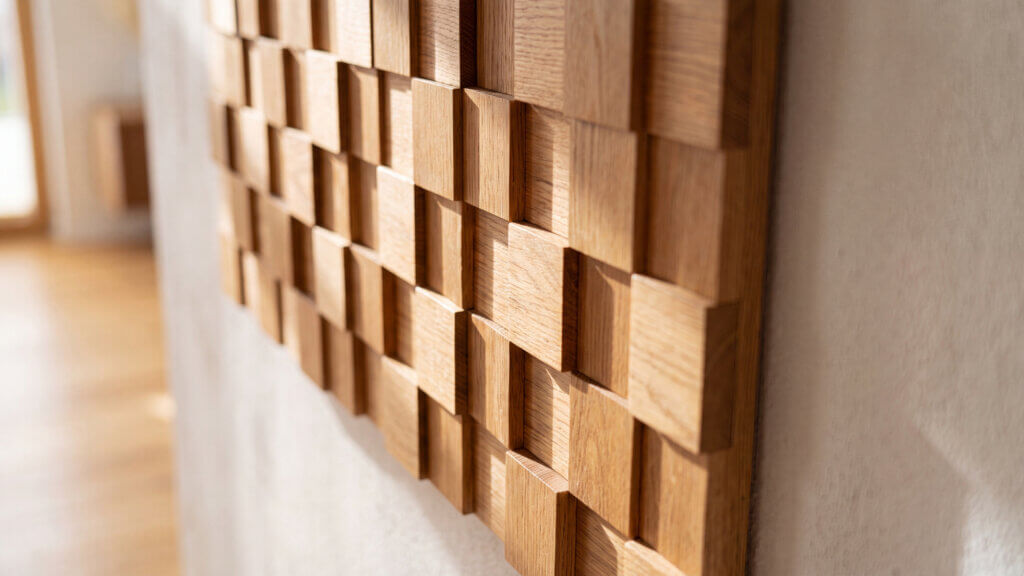
A diffuser can be a relief sculpture in solid wood, its blocks rising and falling across a wall like a city seen from above, the surface that scatters the sound also catching the light. A panel can be a composition of texture and color, quiet and considered, the kind of thing you would hang for its own sake. A run of slatted timber can bring warmth and rhythm to a wall or a ceiling, doing its acoustic work while reading purely as architecture. Even a ceiling can carry a pattern worth looking up at.
These are not studio accessories. They are pieces you would choose for a room whether or not they did anything to the sound, and the fact that they also transform it is the deeper pleasure beneath the surface.
Mindful, not maximal
Used this way, treatment stops hiding and starts contributing. A single sculptural piece can become the focal point of a room, the thing the eye finds first, doing openly and beautifully what foam once did apologetically.
The art is in restraint. Good treatment is not the most you can fit on a wall. It is the right few pieces, chosen with taste and placed with intention, each one earning its presence twice over, once for the eye and once for the ear. A room treated this way does not feel processed or technical. It feels considered, the way a room feels when someone has thought about every surface in it, because someone has.
When a room would rather stay quiet
There are rooms, of course, that ask to say nothing at all. The design is already complete, the walls already speak for themselves, and treatment should simply disappear into them. That too is possible, and sometimes it is right. The same craft can recede behind fabric the color of the wall, or settle into the millwork until it reads as part of the structure, present and working and entirely unseen.
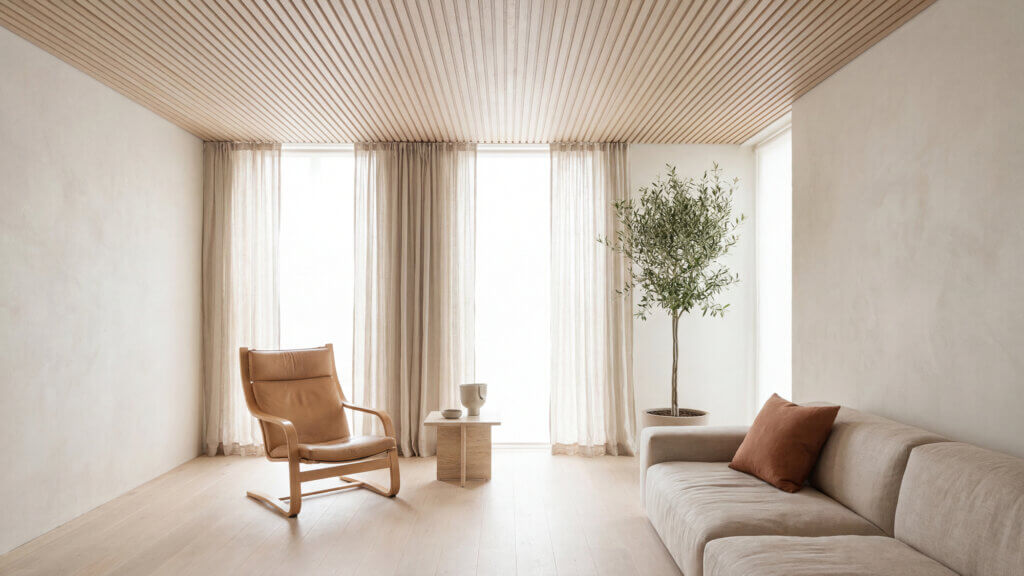
Concealment is one fine option among several. It is a choice a particular room earns, not a rule that treatment must obey. The point was never to hide the work. The point is to make the work beautiful, whether you choose to see it or not.
What changes
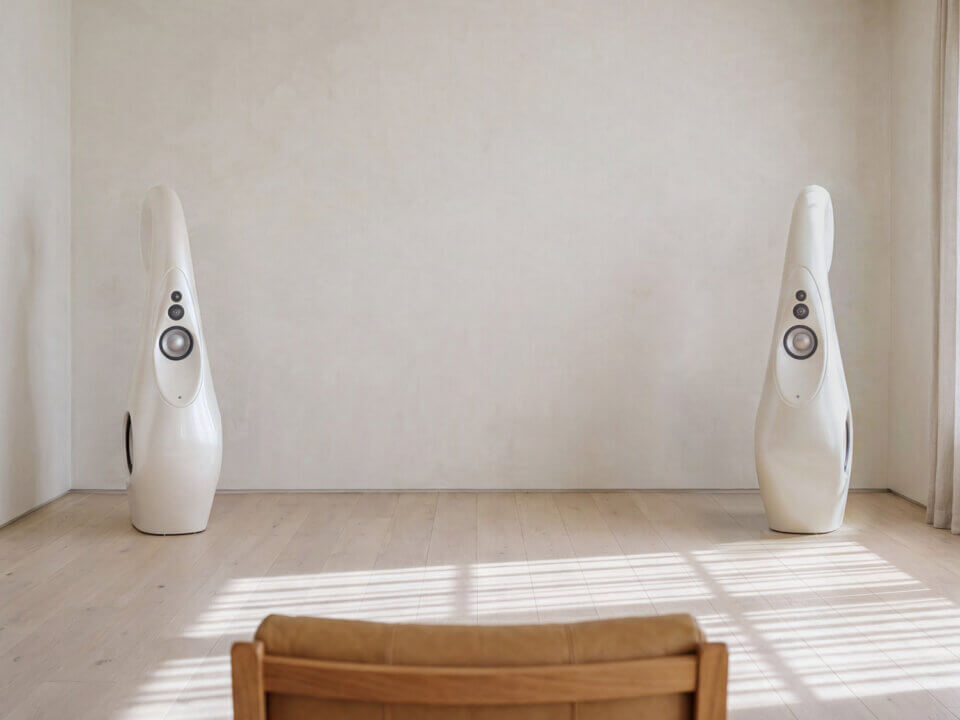
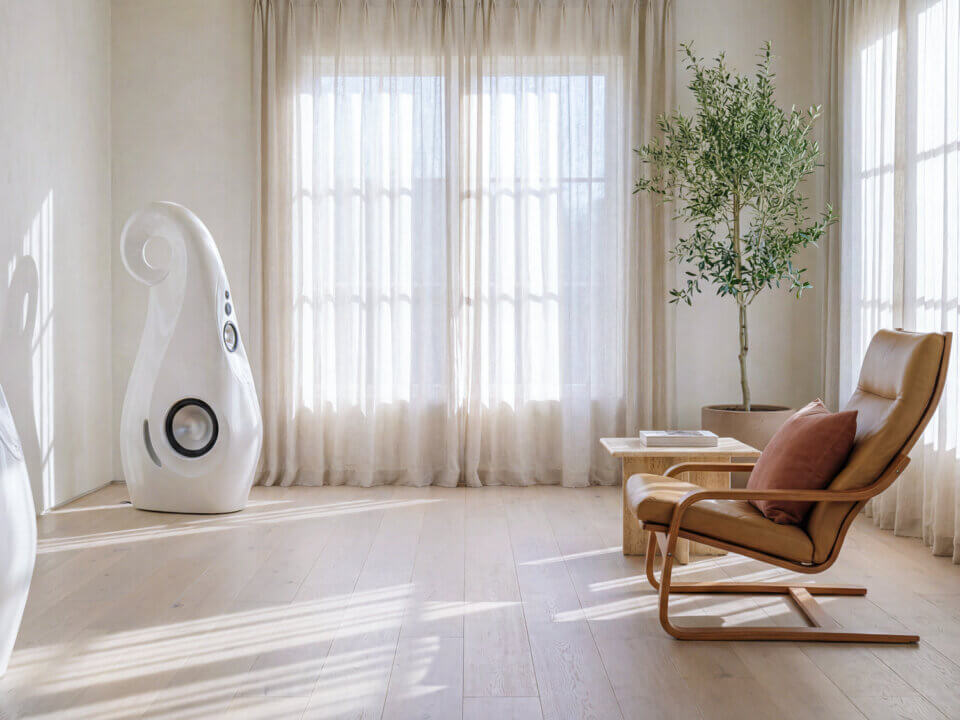
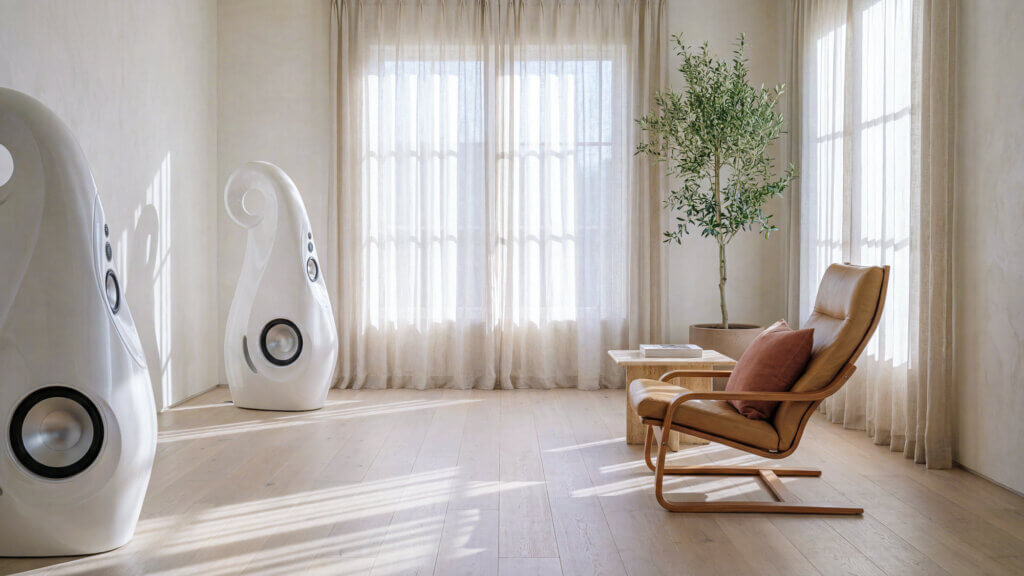
Whichever way a room goes, the result is the same in the way that matters most. The hard edge leaves the sound. The voice at the center holds still. The bass arrives clean and certain instead of thick and wandering. And the room, far from being diminished, has gained something: perhaps a wall worth looking at, a ceiling with rhythm, or simply the quiet sense that every surface was considered. A room that sounds the way it looks, because the same care was given to both.
Where this leads
There is more to say about how to choose among these possibilities, from the piece you would happily place in plain sight to the one you will never notice at all. That is where we turn next.
For now, set down the old fear. A room treated with taste does not look like a studio. It looks like a room someone considered completely, and it sounds that way too.
By invitation. By appointment. By design.

Before the First Change, the Measurement
Before you choose a single beautiful panel, it helps to know which ones your room actually needs. Our sister studio built a room analysis that reads your space and tells you what to change first, and the first move is often free. Where a finding rests on physics, it says so. Where it needs a microphone to confirm, it says that too. You spent years tuning the system by ear. This is the part you were never given a way to tune.