The Evolution of Bliss
June 1, 2026
Where You Sit Is Where It Begins
July 31, 2026The most important part of how your home sounds is the one you may never have thought to design.
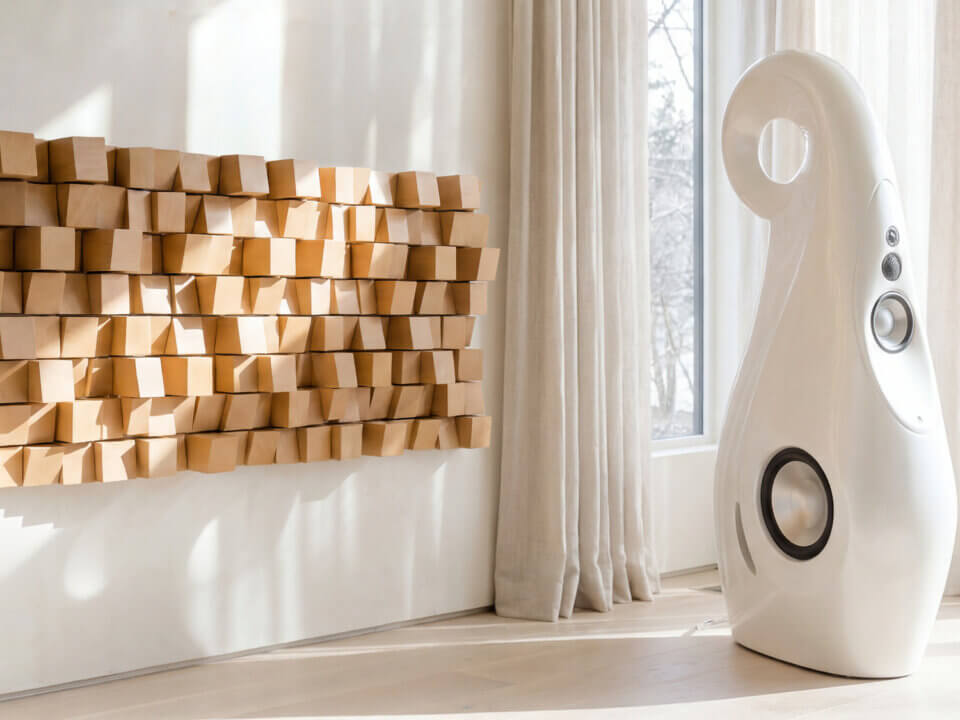
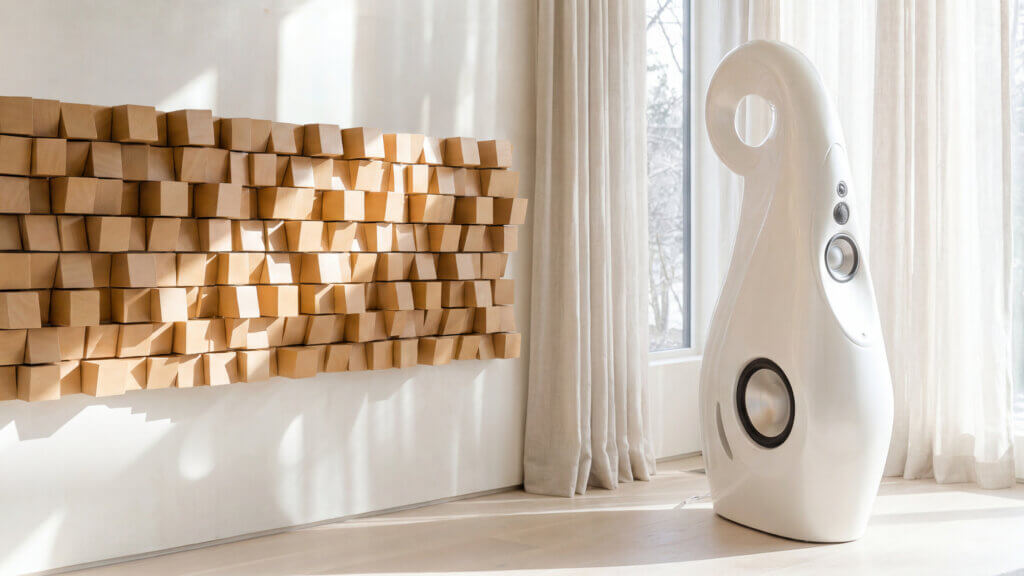
The room where you listen is full of decisions, some yours, some already made when you arrived. The wood underfoot, the plaster on the walls, the weight of the curtains, the glass that carries the late light across the floor. Every one of them was settled on for how the room looks and how it holds you.
Every one of them is also shaping what you hear.
That is the part almost no one designs for, and it is not a minor one. By the time music reaches your chair, the room has had more influence on it than any single piece of equipment in the chain.
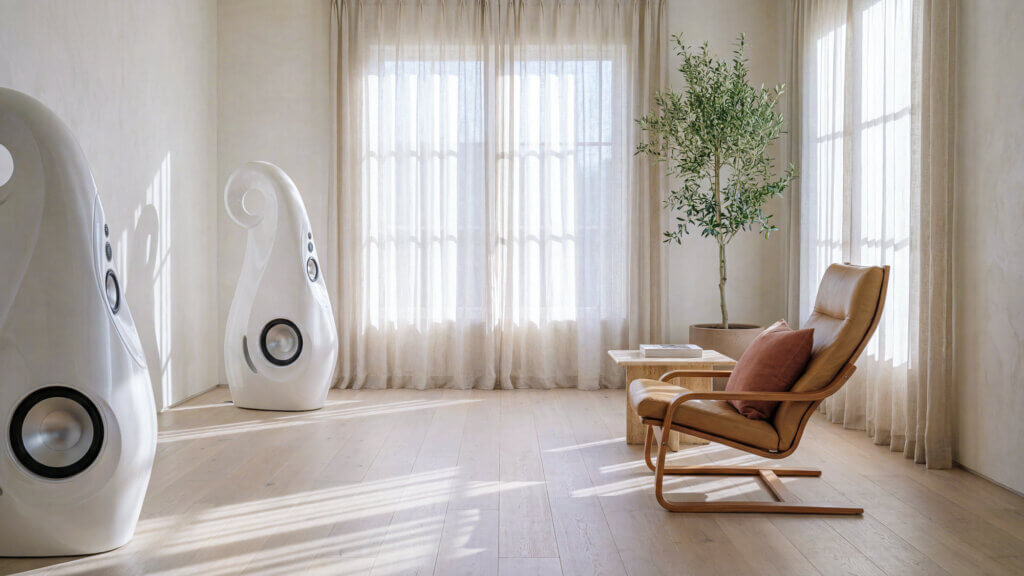
By the time music reaches your chair, the room has had more influence on it than any single piece of equipment in the chain.
Every room has a voice
When a note leaves a speaker, only part of it travels straight to your ears. The rest strikes the walls, the floor, the ceiling and the glass, and comes back. In an ordinary furnished room, most of what arrives at the listening seat has reflected off something first. What you hear is never the recording alone. It is the recording and the room, woven together, inseparable.

Three things are happening at once, and each one can be measured.
The first is in the bass. The lowest notes carry waves long enough to span the room itself, so the space reinforces some of them and cancels others depending on where in the room they are heard. The effect is not subtle. Move a chair a few feet and the same note can go from overpowering to nearly absent. No change of amplifier or speaker matches that swing, and nothing you can put on a shelf will do to the low end what the room is already doing to it.
The second is timing. Sound that glances off the side walls, the floor and the ceiling arrives a moment behind the sound that came straight from the speaker, far too close behind it to register as an echo. The ear folds the two together instead. Those early reflections shift tone color, and they blur where each instrument seems to stand. It is why one room places a singer in a precise spot and another, holding the very same speakers, spreads the whole performance into a pleasant haze.
The third is decay. Every room takes time to let a sound go. Soft materials release it quickly, hard ones hold on to it, and how long the room lingers over each note decides whether a dense passage stays legible or thickens into mush, whether the space feels alive or deadened.
If you have spent years in this pursuit, none of that is news. What stays surprising is how seldom the room gets treated as something to design rather than something to correct.
Why the room gets skipped
The room is not a secret. It is thoroughly documented and well understood, and any serious listener has read about it. The obstacle has never been the knowledge.
The obstacle is the picture that arrives with it. Charts most people cannot read. Grey foam wedges no one would live with. A vocabulary borrowed from the recording studio, aimed at a space that has no interest in resembling one. Framed that way, the room becomes a technical problem, and technical problems do not feel like they belong in a beautiful home.
So the room gets skipped. It is far easier to change a component than a space, and a component arrives in a crate with a manual. The largest variable in the chain stays untouched, which makes it the most common omission in the pursuit of good sound, and the most quietly expensive.
The first changes are free
You can hear the difference between a stone stairwell and a carpeted study the moment you step into either, so this asks for a sensibility you already trust rather than a new one. It also asks for less than most people expect.
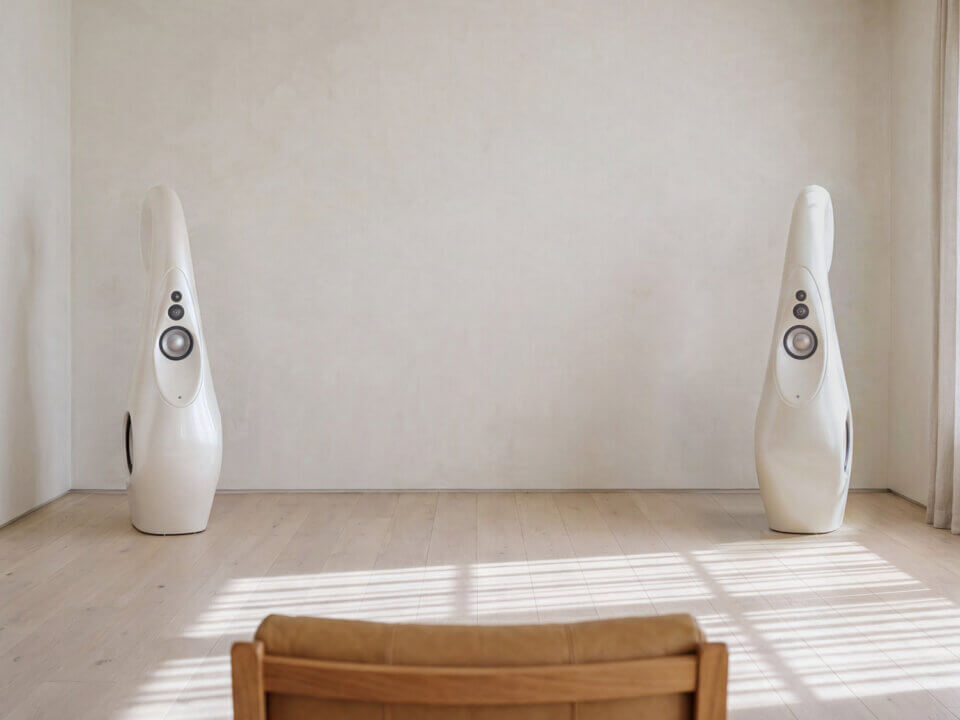
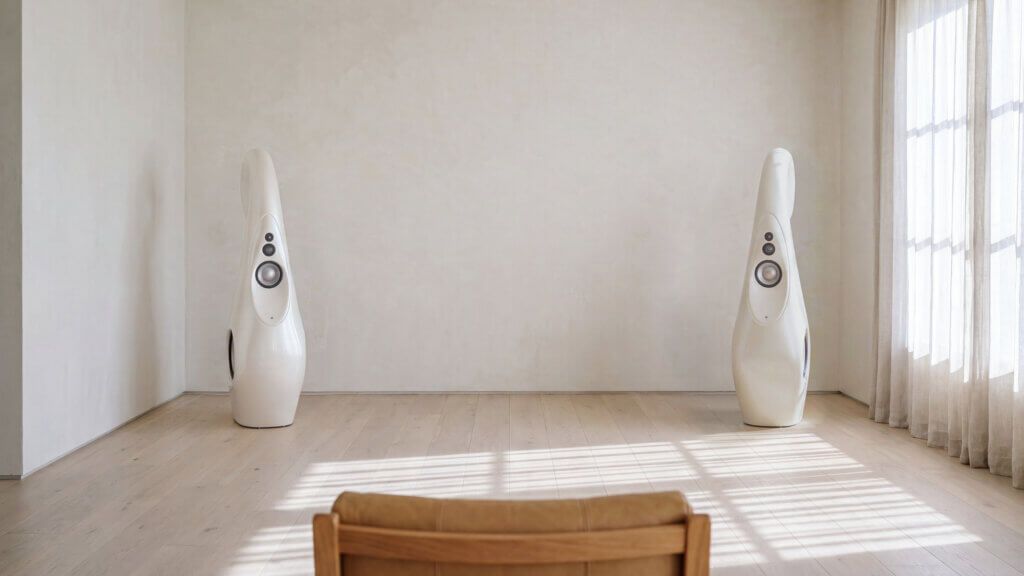
The changes with the greatest effect cost nothing: where the speakers stand, how far they sit from the wall behind them, whether the two sides of the room treat them alike, and where the chair goes. Those decisions set the bass response and the imaging before any treatment or equipment enters the conversation, and all of it can be explored in a single afternoon.
What changes when the room is considered
When the room is finally taken into account, something settles.
A voice stops coming from two boxes and begins to hang in the air between them, in the dark. The space around each instrument opens. The system, the thing you brought into the room, recedes from your attention entirely. What remains is the music, and the room, and you in it.
That is the whole aim. Not a more impressive system. A room that disappears into the experience of listening, so that what reaches you is only the performance, and the quiet certainty that you are exactly where you are meant to be.
Where this begins
This is the first of a series on the part of the system you already own. In the pieces that follow, we will move through it gently. First the two things that cost nothing: where you sit, and where the music comes from. Then the room itself, and the question we are asked most often and rarely answered plainly, which is how a room can be refined for sound and remain, in every way, beautiful. Then the lightest, most invisible refinement of all. And finally, for those building a home rather than living in one, the chance to design sound into the walls from the very first drawing.
Taken together, they are how a room becomes a sanctuary: a space shaped around the way you listen, where the system disappears and the music remains.
For now, it is enough to know this. The deepest improvement available to you is not waiting on a shelf. It is already here, in the room around you, asking only to be considered.
By invitation. By appointment. By design.
The Same Question, Answered for Your Room
The changes that cost nothing are real. Which one your room needs first is a harder question. Resonance was built to answer it. Our sister company reads your space and returns a report that ranks what to change and in what order, beginning with the moves that cost nothing at all. Where a finding rests on the physics of the room, it says so. Where it needs a microphone to confirm, it says that too. The rest of the system you can judge by ear. This is the part you were never given a way to read.