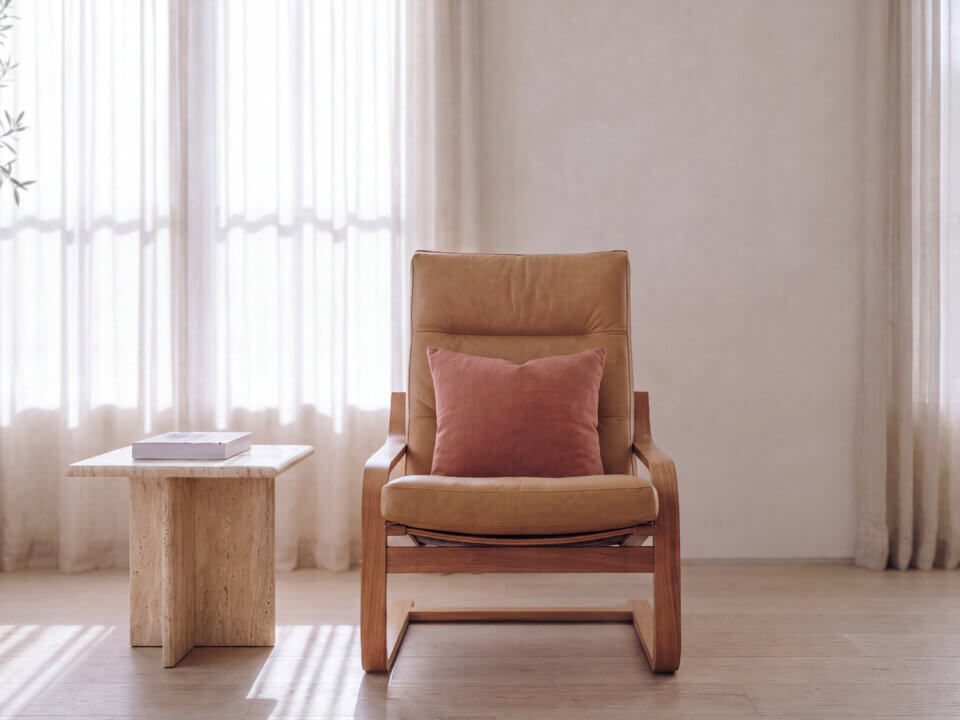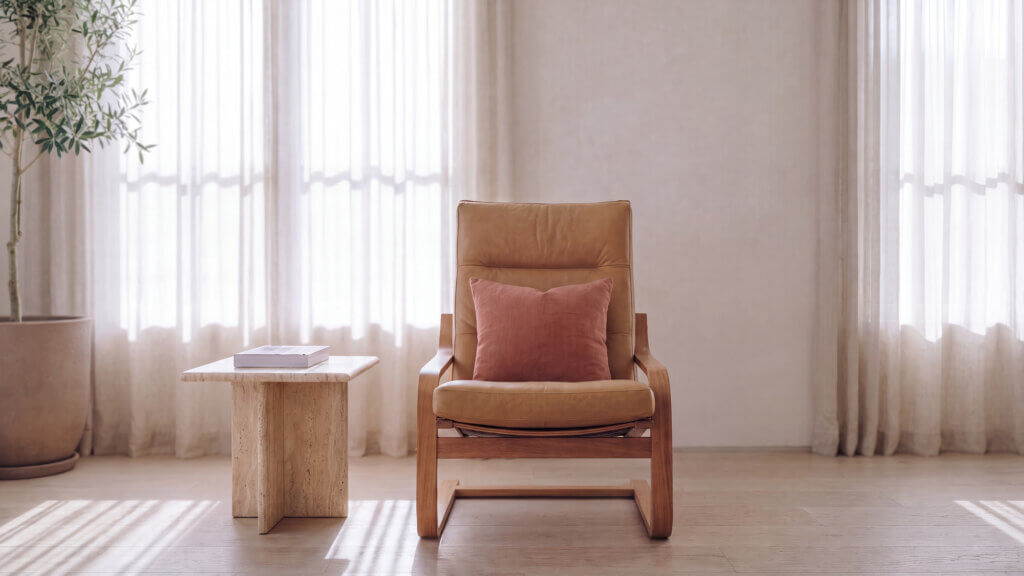
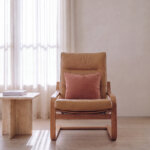
Where You Sit Is Where It Begins
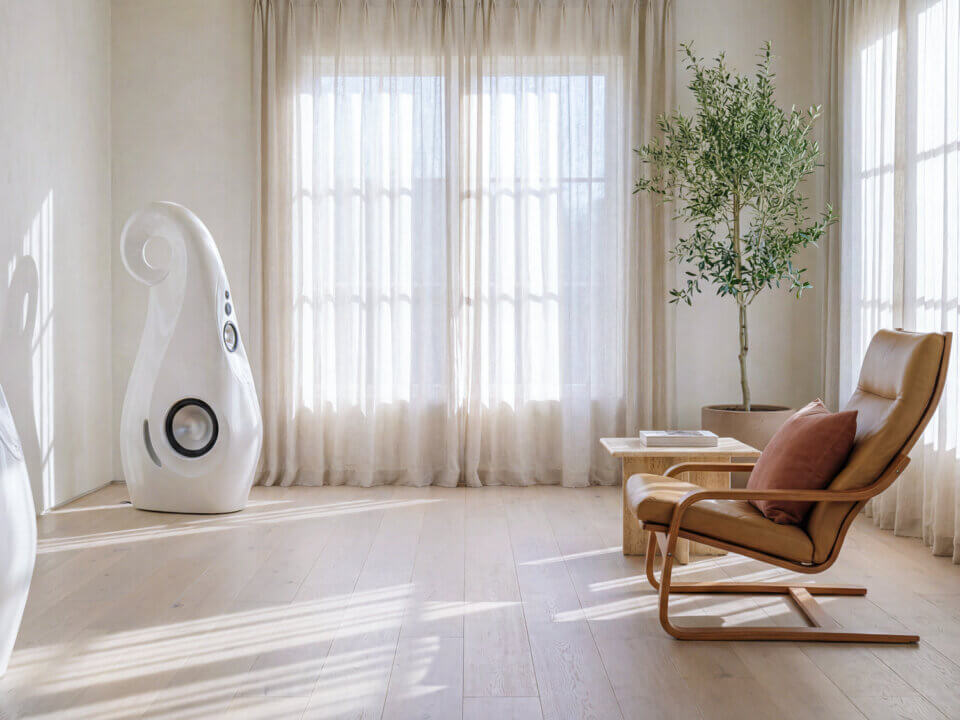
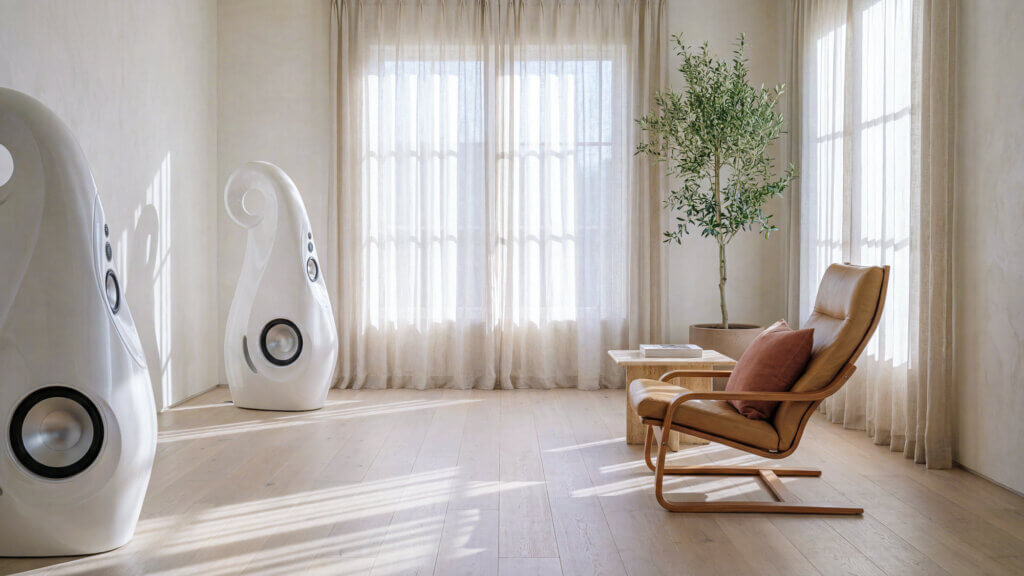
July 31, 2026Two speakers and one listener form a triangle. Inside that triangle, placed with care, a voice appears where no speaker stands.
Think of how you arrange a room for conversation. Two chairs angled toward each other, close enough to feel intimate, far enough to leave room to breathe. You did not measure it. You felt your way to it, because you understand, without being told, how people relate across a space.
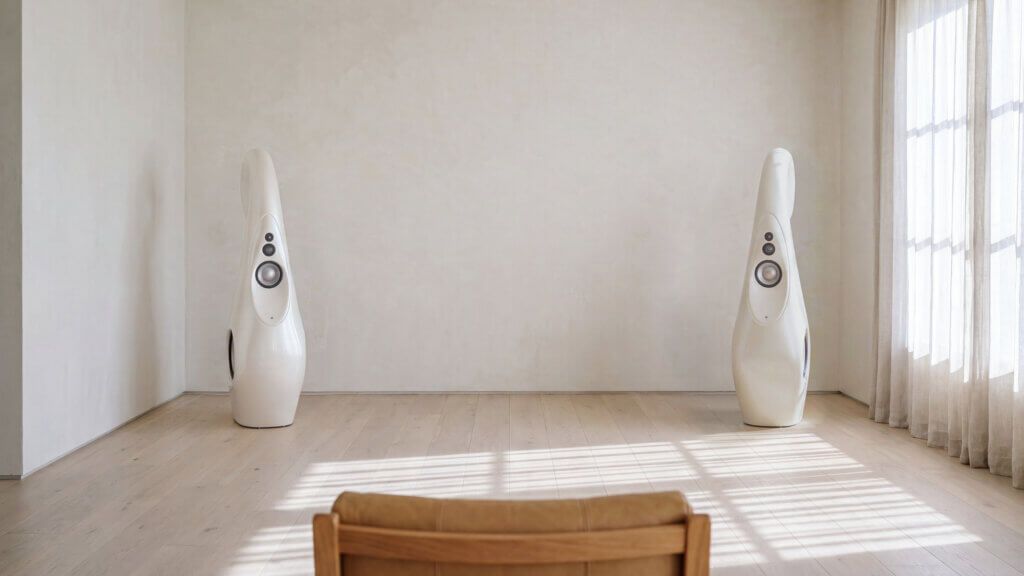
This is not something you buy. It is something you place. It lives entirely in the geometry of two speakers and one chair, and it waits in almost any room, available for the cost of moving things a few inches at a time.
Two speakers, one conversation
A speaker on its own makes sound. A pair of speakers, placed well, makes something else entirely. Together with your chair they form a triangle, three points held in a particular relationship, and the music lives in the balance between them.
The relationship wants to be even. The two speakers want to sit roughly as far apart as they sit from you, each at the same distance, each given the same view of the room. Spread them too wide and the music tears down the middle, a hole opening where the heart of it should be. Crowd them too close and the stage shrinks to the width of a doorway. Somewhere between is the distance where two speakers become one, and you will know it when you hear it.
The voice that stands in the empty air
Here is the quiet miracle of it. When the triangle is right, a voice appears in the space between the speakers, where nothing physical is making a sound. A singer stands in the dark at the center of the room, at the height of a person, inhabiting air. The piano spreads to one side. The brushes on the drums hang just behind. The two boxes that produce all of this seem to vanish, and what is left is a performance, arranged in space, in front of you.
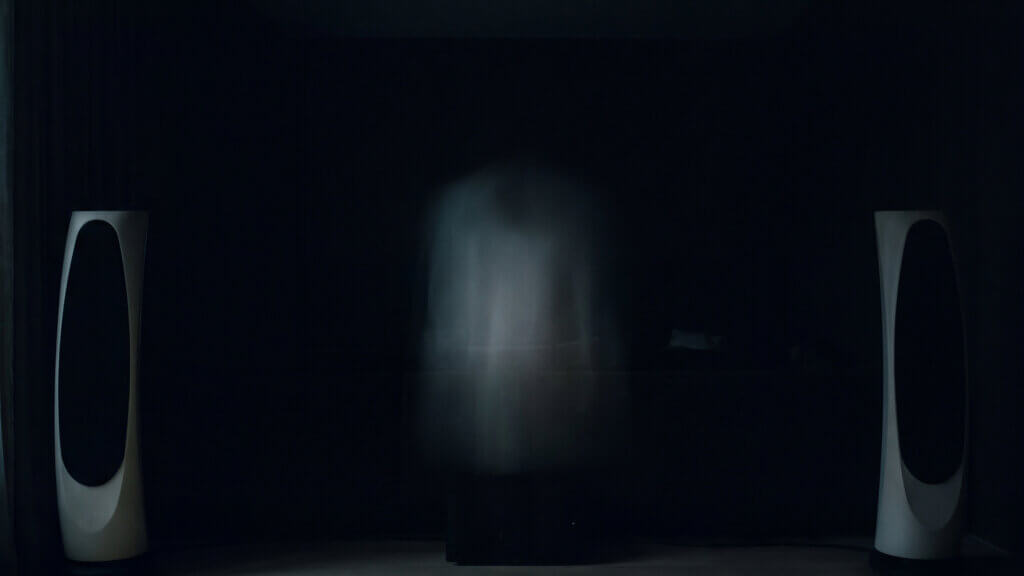
This is not something you buy. It is something you place. It lives entirely in the geometry of two speakers and one chair, and it waits in almost any room, available for the cost of moving things a few inches at a time.
Small turns, large changes
A few gentle adjustments bring it into focus.
Turn the speakers to face you, the way you would turn toward someone who had begun to speak. Aimed straight down the room, they talk past you. Angled inward, toward the chair, they talk to you, and the voice at the center sharpens and settles.
Give them room to breathe. Pressed against the wall or folded into a corner, a speaker loses its depth, and its low notes thicken into a single heavy hum. Drawn out into the room, even a hand’s width, it recovers its air, and the stage steps back behind the speakers rather than crowding in front of them.
And treat the pair as a pair. Whatever you grant to one, grant to the other. The same distance, the same angle, the same relationship to the walls. The voice at the center depends on the two halves matching, and the room will reward the symmetry with a stillness at its heart.
What changes when the speakers are placed
Place them with this kind of care and the room deepens. The flat wall of sound you may have lived with for years dissolves into something with width and depth and height, a space you could almost walk into. Instruments take their positions and hold them. The recording stops playing at you and begins to unfold in front of you, and the difference, once you have heard it, is difficult to unhear.
You changed nothing but where two things stood. That is the whole lesson of these early refinements. The largest gains in a system are rarely the ones with a price attached.
Where this leads
The seat and the speakers are the two decisions that cost nothing, and together they carry the music as far as moving things alone can carry it. What remains lives in the room itself: in its surfaces, its corners, the hard and the soft of it. That is the part most people are afraid to touch, because they imagine it means turning a beautiful room into a studio.
It does not. And that is where we turn next.
For now, the invitation is the same as before. Move your speakers a few inches inward, turn them gently toward your chair, and listen for the voice that appears between them. It was always there, waiting to be placed.
By invitation. By appointment. By design.
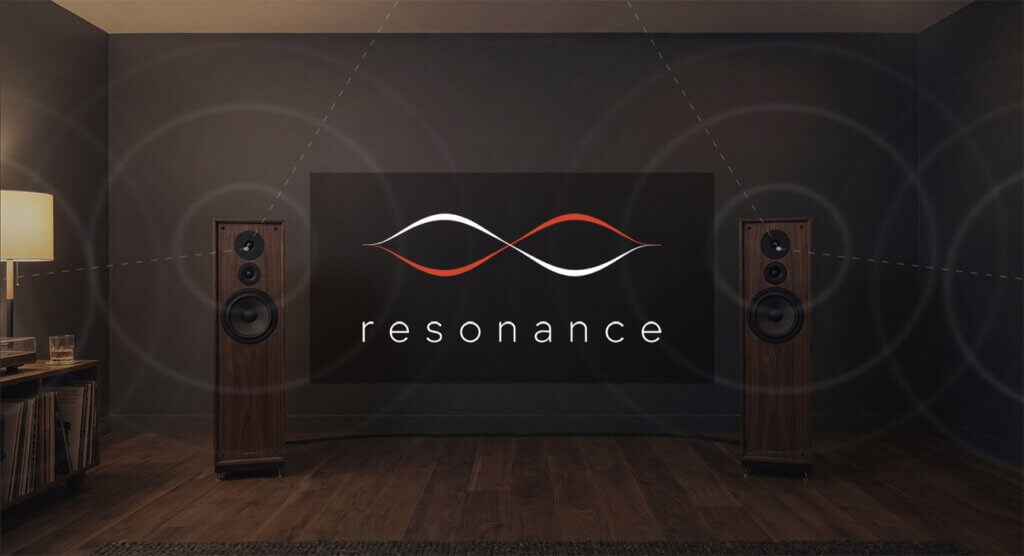
The Same Question, Answered for Your Room
Moving speakers by ear carries you a long way. What your room is doing while you move them is another question entirely. Resonance was built to answer it. Our sister company reads your space and returns a report that ranks what to change and in what order, beginning with the moves that cost nothing at all. Where a finding rests on the physics of the room, it says so. Where it needs a microphone to confirm, it says that too. The rest of the system you can judge by ear. This is the part you were never given a way to read.