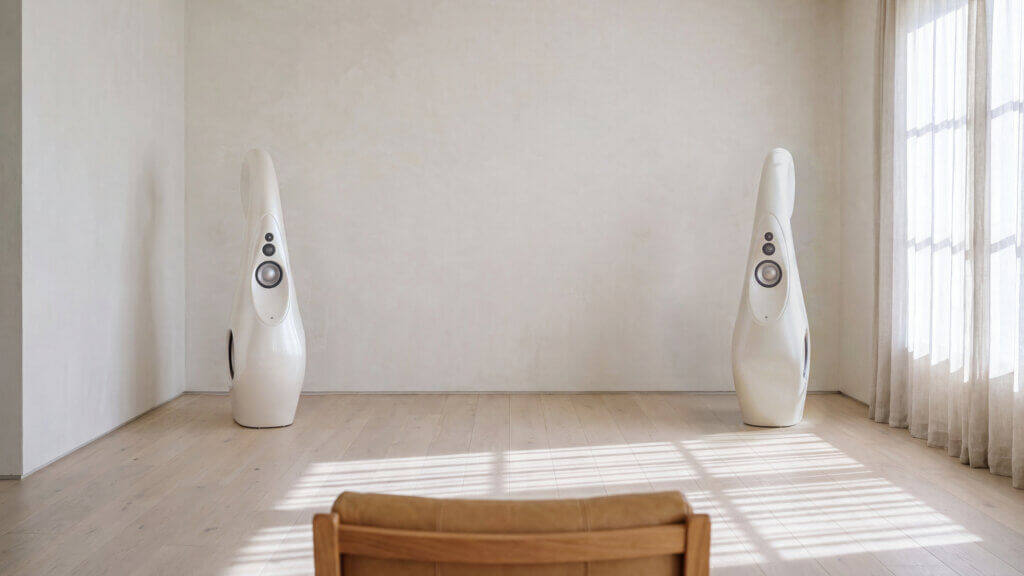

A Room That Sounds the Way It Looks
September 29, 2026Treatment is not a single thing to hide. It is a spectrum of choices, running from the piece you would happily display to the one you will never notice at all.
Every room you love is the sum of choices about what to put in it. The painting you went back for. The chair you waited months to find. The objects on the shelf that mean nothing to a visitor and everything to you. A room becomes yours through what you choose to live with, and through the quieter art of what you choose to leave out.
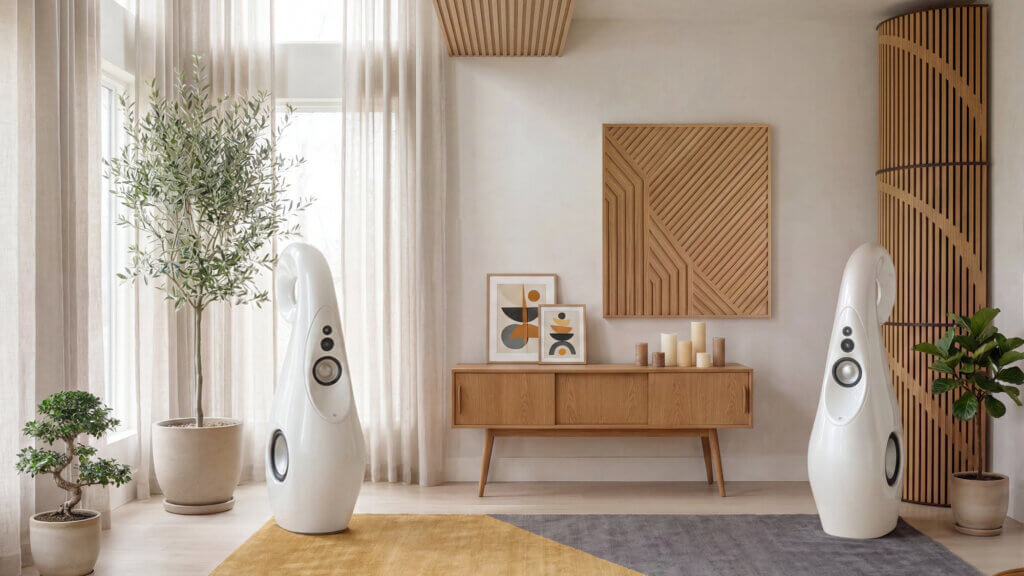
The pieces that shape how a room sounds are choices of exactly this kind. We have spoken already of how beautiful those pieces can be, and how the finest of them deserve to be seen. That is one end of a longer spectrum, and a lovely one. It is worth knowing the rest of the range, because most rooms are served best by some thoughtful mix along it.
At one end sits the piece you would happily place in plain sight, because it is beautiful in its own right. In the middle sits the piece that recedes into the architecture, present but unannounced. And at the far end sits the piece you will never see at all, working in complete quiet from somewhere you would never think to look. Choosing where a room belongs along that range is its own small pleasure.
The piece you choose to see
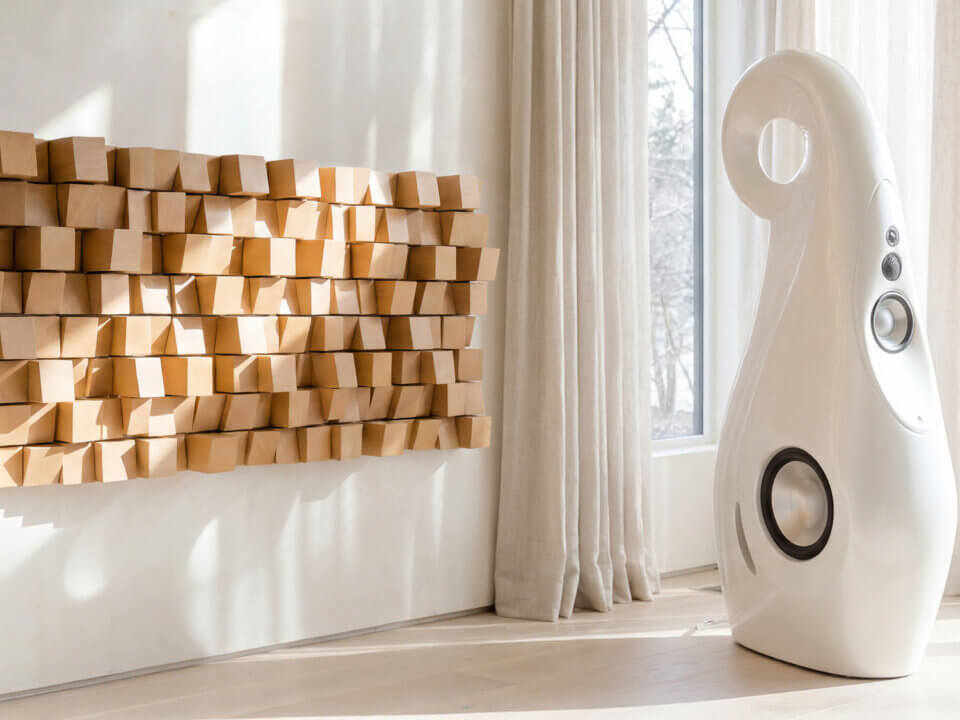
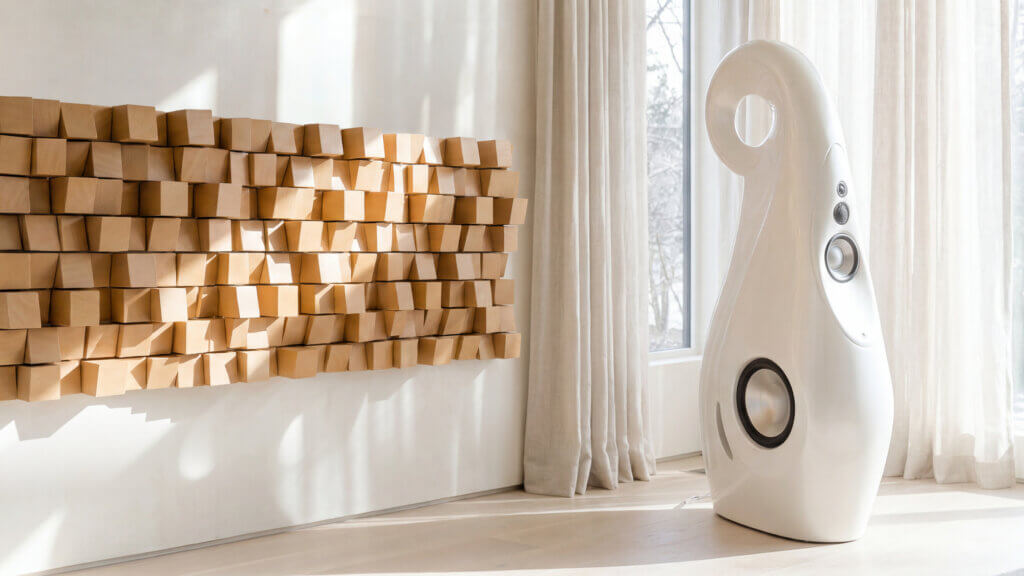
We have lingered on this end already, where the best treatment is beautiful enough to display and earns its place in a room twice, once for the eye and once for the ear. It is where many rooms should begin, and for some it is the whole of the answer. But it is only one end of the range.
Treatment that belongs
For rooms that prefer to say less, the same work can recede into the architecture, built into the walls and the millwork until it reads as nothing but the room itself. We have walked through this already. It is the middle of the spectrum, the treatment that neither announces itself nor hides entirely, but simply belongs, the way good detailing always seems to have been there from the start.
Treatment you forget is there
And then there is the far end, the most discreet of all.
A room can be refined by a handful of small, unobtrusive pieces, set with care at the few points where they do the most good. Placed here and there along a wall, they lift a kind of haze from the sound that you did not know was present until it is gone, and they do so while all but vanishing into the room. A guest would never find them. You would struggle to point to them yourself a week later. The improvement is plain. The cause is nowhere to be seen.
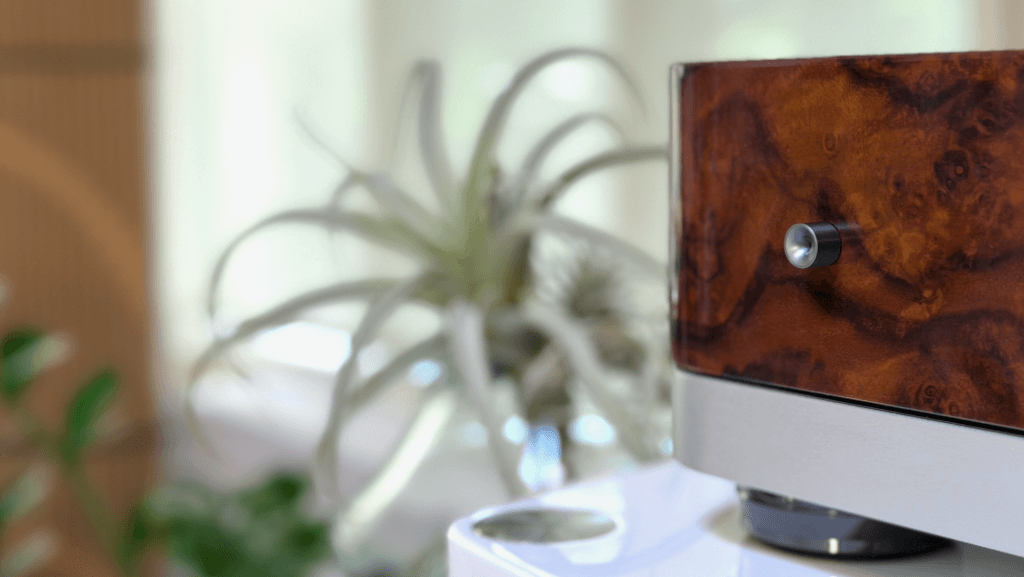
The lowest notes have a version of this too. Where a traditional bass solution might mean a sizable presence in the corner, a more compact device, tucked quietly out of the way, can calm the heaviness and the boom that large rooms and small ones both suffer, asking almost nothing of the space in return. The effect is quietly remarkable. The room grows clearer and more composed, and nothing about it appears to have changed.
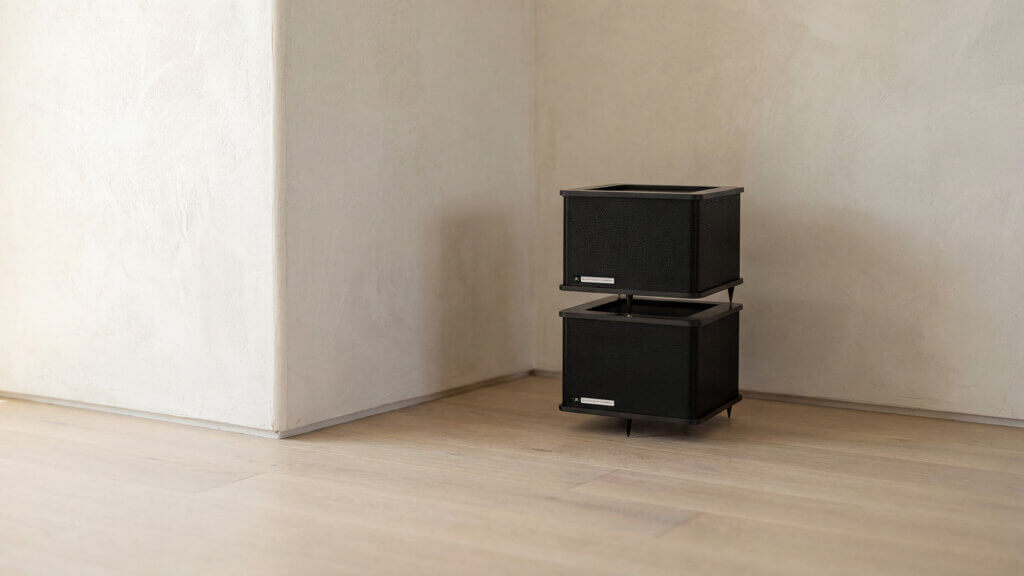
This is the part of the craft most people never hear about, because it makes no statement to admire and leaves no object to discuss. It works precisely by being overlooked. For the room that wants every gain with none of the evidence, it is often where the most satisfying refinements live.
What changes, and how you choose
The point of the spectrum is that you are never forced to a single answer. A room with a beautiful empty wall might welcome a piece worth seeing. A room already rich with art might prefer its treatment to vanish into the structure, or to work unseen from a few quiet points. Most rooms call for some thoughtful combination of all three, and the craft is in reading which is which.
That reading is, at heart, an aesthetic judgment, and it is yours to make. You already know what a room can carry and what it cannot, what wants to be seen and what wants to stay quiet. Treating a room for sound asks only that you extend that same eye to one more kind of choice. Done well, the result is a room that sounds composed and unforced, and looks as though nothing was ever imposed upon it, because nothing was. Every piece in it, seen or unseen, was chosen.
Where this leads
Across this whole spectrum, from the piece on the wall to the one you will never find, every choice so far has been a physical one, something placed in the room. There remains a single layer that touches the room not at all, that works entirely within the signal and leaves not even an unseen object behind. It is the lightest refinement of all, and the last. That is where we turn next.
For now, the thought to carry is a freeing one. Treating a room well is not a compromise to be hidden. It is a series of choices, as considered and as personal as any other you have made in your home, and some of the best of them you will want in plain sight.
By invitation. By appointment. By design.

Before the First Change, the Measurement
The right treatment starts with knowing what the room is doing without any. Our sister studio built a room analysis that reads your space and tells you what to change first, and the first move is often free. Where a finding rests on physics, it says so. Where it needs a microphone to confirm, it says that too. You spent years tuning the system by ear. This is the part you were never given a way to tune.